
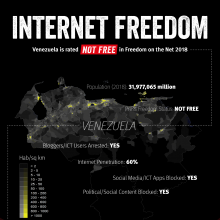
Reading the newspapers in Venezuela or hearing the news on television or radio you may well get the impression that there is no cause for alarm—all is peace and quiet. The distribution of food functions, so do the health services, the legal system, and the schools. The official picture is that people are neither starving nor fleeing the country. They are free to move around without any restrictions and to express themselves freely. Early on in 2018 President Nicolás Maduro held a speech to the nation where he claimed precisely this. He said: “We ought to be grateful that Venezuela is not in a state of collapse or in any humanitarian crisis like Colombia. We have a nation that loves its government.”
Such absurdity. Such outright mockery—a slap in the face. The Croatian writer Dubravka Ugrešić once wrote: “Erasing the memory of a place, making it seem as if whole lives and societies have never existed, must be one of the ultimate forms of censorship.”
Reality, or rather the apocalypse taking place outside of the reality depicted in the state owned daily papers, the TV and radio broadcasts, and the politicians’ propaganda machines could not be more contrastive. Venezuela is a country on a steep downward slope with a soaring inflation, a starving population, almost non-existent health services, and a systematic censorship of the media. In 2018, 23 047 people were murdered, which means 63 killings per day (the data is from the independent institute Observatorio Venezolano de Violencia). According to UNCHR more than five thousand people are fleeing the country every day. Among them are many writers, journalists, and intellectuals. The dismantling of the rights to free expression has made it impossible for intellectuals to remain and to pursue their profession. To leave the country has become the norm; the norm is not to stay.


